
Mastering Voltage Settings in Powder Coating
페이지 정보
작성자 Shauna 작성일 26-01-08 02:01 조회 30 댓글 0본문
Fine-tuning voltage parameters for optimal powder application is a critical step in achieving a consistent, resilient, and visually appealing coating while lowering costs and environmental impact. Powder coating relies on static charge adhesion to adhere charged powder particles to a grounded metal substrate. The kV level configured directly influences the strength of this electrostatic field, which in turn affects transfer efficiency, coverage, and film thickness.
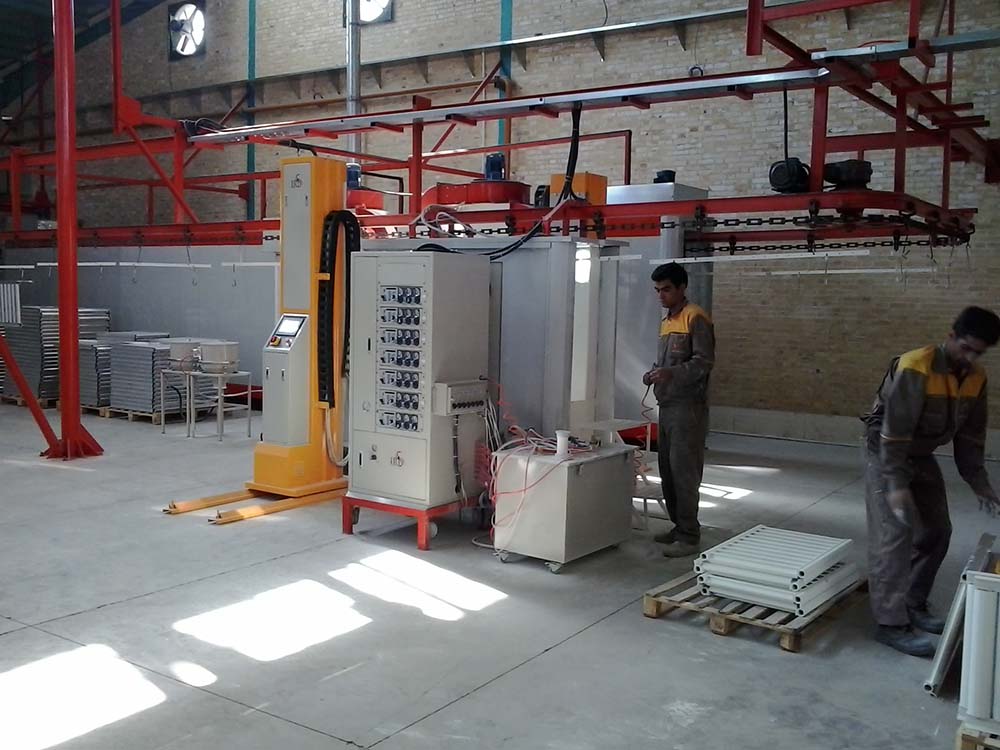
Using insufficient kV may result in incomplete surface bonding and patchy deposition, while setting it too high can cause repulsive ionization, creating a bumpy, orange-peel surface or even complete powder rebound.
To begin optimizing voltage, first understand the specific characteristics of your application powder. Different coating chemistries have differential static hold and granule dimensions. Micro-particle coatings typically require reduced kV levels, as they are more easily charged and attracted to the substrate. Heavy-particle coatings may need stronger electrostatic potential to penetrate airflow and ensure proper landing. Consult the powder manufacturer’s technical data sheet for application-specific settings, as these are often customized for resin type and spray technique.
Next, consider the physical contours of the component. Complex shapes with recesses, corners, or sharp edges present distinct application difficulties. Areas with high curvature or points tend to concentrate the electric field, making them more prone to excessive buildup or charge repulsion. For such parts, it is often beneficial to use a reduced kV paired with reduced spray speed or multiple passes. Conversely, broad planar areas can typically tolerate stronger charge levels, allowing for faster application and improved transfer efficiency.
Precise system tuning is non-negotiable. Periodically validate the electrostatic output against a precision voltmeter to ensure accuracy. Over time, electrodes wear out, leading to inconsistent voltage delivery. Also, ensure that the electrical connection to the substrate is clean, unobstructed, and conductive, as inadequate grounding undermines even optimal voltage settings.
Ambient conditions significantly affect performance. Damp ambient air can dissipate static charge, reducing the strength of powder adhesion. In such conditions, slightly increasing the voltage may compensate for the loss of charge retention. However, persistent high moisture should be regulated with dehumidifiers rather than depending only on kV increases.
Start with the supplier’s baseline setting and conduct a series of test sprays on representative test panels. Assess coating depth across various zones and observe the surface finish under magnification. Look for signs of undercoating, pinholes, or orange peel. Adjust the voltage in small increments—typically 5 to 10 kV at a time and record the results. The goal is to find the optimal setting achieving uniformity with zero flaws. Reduced kV typically results in better transfer efficiency and less overspray, which translates to cost savings and less environmental impact.
It is also important to coordinate voltage with other parameters such as compressed air settings, feed rate, and standoff distance. Increasing voltage should not be used as a substitute proper gun positioning or inadequate airflow. A balanced application process harmonizes parameters for peak performance.
Finally, educate technicians on key indicators of correct electrostatic levels. A even, non-glossy coating at stable depth indicates accurate calibration. A patchy, reflective, or rough finish often signals voltage issues. Keep a detailed record of parameters per substrate and powder to build a reference database for future runs.
By routinely analyzing, recording, Tehran Poshesh and refining settings in relation to powder type, part geometry, and environmental conditions, you can significantly improve the efficiency and consistency of your electrostatic application system. This not only reduces operational costs and material waste but also ensures reliable results in every production run.
- 이전글 [HW-B1.COM]할로윈[코드588 첫충40% 매충20%]
- 다음글 【둘리알바】 임실군노래방알바 임실군노래방도우미 임실군노래방도우미알바 부안군룸알바 부안군룸보도 부안군보도사무실
댓글목록 0
등록된 댓글이 없습니다.