
ABM and Beyond: FileViewPro’s Complete File Support
페이지 정보
작성자 Freya 작성일 25-12-30 02:08 조회 4 댓글 0본문
ABM database files are most notably used as export files by the Alpha Five (now Alpha Anywhere) relational database system from Alpha Software, where they act as portable containers for structured data pulled from an Alpha Five application. In Alpha Five deployments, ABM exports often bundle rows, field definitions, and supporting metadata so that entire datasets can be transferred between solutions, backed up as standalone files, or transformed by import utilities. Since the ABM database export format is specific to Alpha Software’s products, it should be treated as an internal data container and modified only through Alpha’s own tools, as direct tampering can render the data unusable. On systems that still have Alpha Five or Alpha Anywhere installed, ABM files are normally handled through built-in import or restore functions, which interpret the file’s layout and rebuild the original table data safely. If direct import into Alpha is not possible, tools such as FileViewPro can often detect that the file is an Alpha Five ABM database export, expose whatever non-destructive details can be read, and assist you in troubleshooting or planning a migration path.
Behind nearly every modern application you rely on, whether it is social media, online banking, email, or a small business inventory tool, there is at least one database file silently doing the heavy lifting. At the simplest level, a database file is a structured container that stores collections of related data so software can save, search, update, and organize information efficiently. In the event you liked this short article in addition to you would like to get more info regarding ABM file download generously visit the web-site. Instead of being free-form like ordinary text files or spreadsheets, database files follow defined structures, use indexes, and enforce access rules so they can manage huge volumes of records with speed and stability.
Database files have their roots in early enterprise computing, when organizations in the 1950s and 1960s began shifting from paper documents to structured data stored on magnetic media. These early designs were usually hierarchical or network-based, organizing information into parent-child relationships joined together by pointers. This style of database could handle known workflows, but it made it challenging to restructure data or add new relationships over time. The landscape changed dramatically when Edgar F. Codd presented the relational model in the 1970s, shifting databases toward table-based structures governed by clear mathematical foundations. Codd’s ideas inspired generations of relational database products, including DB2, Oracle, SQL Server, MySQL, and PostgreSQL, and each of these platforms relies on its own database files to hold structured, SQL-accessible information.
With the growth of database technology, the internal layout of database files kept evolving as well. Many early relational engines stored user data, indexes, and system information together inside a few big proprietary files. As technology progressed, it became common to distribute tables, indexes, logs, and scratch space across distinct files to gain better control and performance. Alongside large server systems, smaller self-contained database files appeared for desktop and mobile use, such as Access databases, SQLite files, and numerous custom formats. Even if you never notice them directly, these database files power business accounting tools, media libraries, contact managers, point-of-sale systems, and countless other software solutions.
Engineers building database software must overcome multiple technical hurdles as they design the structure of their database files. One of the most important goals is to keep data consistent even if the program crashes or the power fails, which is why many databases use transaction logs and recovery mechanisms stored in separate files. At the same time, the file format has to work with locking, transactions, and concurrency control so that several clients can interact with the same database without damaging it. Stored indexes and internal lookup structures behave like advanced search maps, allowing the database engine to jump straight to relevant data instead of reading everything. Some database file formats are tuned for analytics and reporting, using column-oriented layouts, compression, and aggressive caching to speed up large read-heavy workloads, while others prioritize fast inserts, updates, and strict transactional guarantees for intensive day-to-day operations.
Database files are used in advanced scenarios that go far beyond simple record keeping for a single application. For data warehouses and business intelligence platforms, very large database files store years of history from different sources, enabling complex trend analysis, interactive dashboards, and predictive models. Spatial databases use tailored file formats to record coordinates, shapes, and location-based attributes, supporting everything from online maps to logistics planning. Scientific and engineering projects use databases to capture experimental results, simulation outputs, and sensor readings so researchers can query and compare huge volumes of information. Although NoSQL technologies often present a different logical model, under the hood they still write data to specialized database files tailored to their particular access patterns.
As computing has moved from standalone servers to globally distributed platforms, the way database files are managed has changed alongside it. Previously, the entire database usually resided on one box, but today cloud-oriented designs partition and replicate data across clusters of nodes to boost resilience and scalability. Despite this distribution, every node in the cluster continues to maintain its own set of files, often using log-structured or append-only techniques that later reorganize data in the background. Newer file formats also take advantage of SSDs and high-speed networked storage, focusing on patterns that reduce latency and make better use of modern hardware. Ultimately, no matter how sophisticated the surrounding infrastructure becomes, the database file continues to act as the persistent foundation where data is permanently stored.
With different vendors, workloads, and platforms, it is not surprising that there are countless database file extensions and unique storage formats in use. Certain database file types are openly specified so other software can read them, but many are proprietary and designed to be used only by the original application. From the user’s perspective, this diversity can be frustrating, particularly when mysterious database files appear on a hard drive or are sent by someone else. Sometimes the file is part of a larger application and should not be changed manually, sometimes it is a portable database that can be opened and inspected, and sometimes it is simply a local cache.
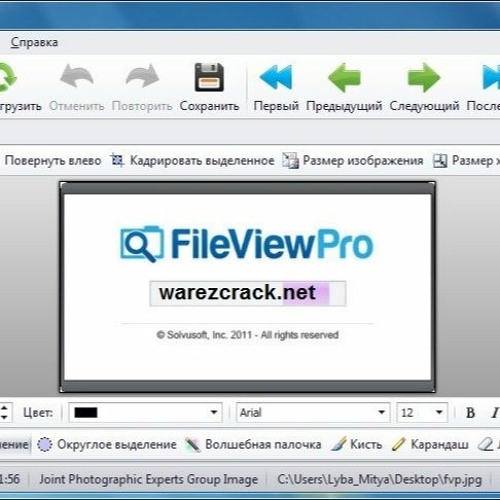
In the future, database file formats will probably grow more specialized and efficient, adapting to new hardware and evolving software patterns. Future formats are being built with aggressive compression, quick analytical access, and advanced safeguards that maintain accuracy even across complex distributed setups. Since data is constantly being transferred between legacy systems, new applications, and cloud services, the ability to interpret and transform different database file formats has become a major concern. In this environment, utilities that can open, inspect, and sometimes convert database files are extremely valuable, especially when documentation is limited or the original application is no longer available.
The main point for non-experts is that database files are deliberate, structured designs intended to keep data fast, safe, and manageable, rather than simple collections of raw bits. Because of this, it is essential to handle them cautiously, maintain proper backups, avoid editing them with inappropriate tools, and rely on specialized software when you need to explore or work with their contents. With a utility like FileViewPro, users can often determine what kind of database file they are dealing with, see whatever information can be safely displayed, and better understand how that file relates to the applications that created it. Whether you are a casual user trying to open a single unknown file or a professional working through a collection of legacy databases, recognizing the purpose and structure of database files is a crucial step toward managing your data safely and effectively.
댓글목록 0
등록된 댓글이 없습니다.